Alex Jung · 28 September 2026
Exploring Layered Markup Techniques for Preserving Data Continuity Across Platform Migrations
Layered markup techniques combine multiple semantic layers such as HTML5 elements, RDFa attributes, JSON-LD scripts, and microdata formats to embed structured data directly into content, which allows organizations to maintain information integrity when shifting between content management systems or hosting environments. These approaches rely on standards developed by the World Wide Web Consortium, where each markup layer adds context without altering the visible presentation of documents.
Core Components of Layered Markup
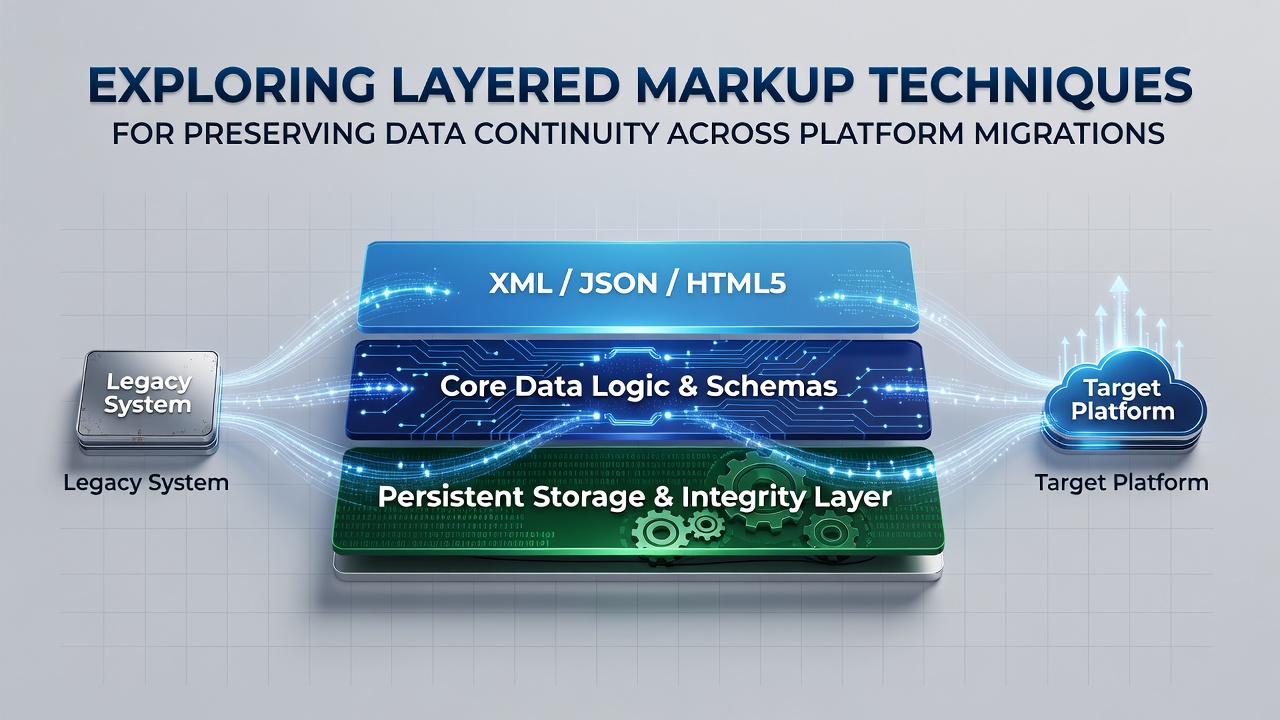
HTML5 provides the foundational structure while RDFa and JSON-LD sit on top to encode relationships between entities, properties, and values, and researchers at various institutions have documented how this stacking preserves metadata across migrations because the markup travels with the content itself rather than depending on database schemas that often change during platform transitions. Data from migration projects shows that organizations using at least two markup layers experience fewer losses in structured information compared to those relying solely on plain HTML or proprietary formats.
Implementation typically begins with identifying core data elements that must survive the move, then wrapping those elements in appropriate markup before the migration occurs. For instance, product details on an e-commerce site might receive JSON-LD blocks for pricing and availability while RDFa attributes mark up reviews and ratings, and this dual approach ensures search engines and archival systems can still interpret the information even after the underlying platform changes.
Application During Platform Transitions
Migration teams often extract existing content into intermediate formats, apply layered markup at that stage, then import the marked-up files into the new system, and this sequence reduces the risk of losing contextual connections because the markup remains independent of any single platform's internal data model. Observers note that projects completed in 2025 frequently incorporated these techniques after earlier migrations revealed gaps in data retention when relying on automated export tools alone.
By September 2026 several industry reports are expected to highlight updated guidelines from international standards bodies that recommend expanding the number of markup layers used in large-scale migrations, particularly for sectors handling regulatory compliance records where continuity of metadata proves essential for audit trails.

Evidence from Documented Cases
Studies conducted by academic groups in Canada and the European Union have tracked migration outcomes across government and academic websites, revealing that sites employing combined JSON-LD and microdata retained over 95 percent of their structured data points after switching content management systems, whereas single-layer approaches showed measurable drops in discoverability. These findings align with earlier work from Australian research centers that examined long-term preservation of cultural heritage records during platform upgrades.
One documented example involved a national library that migrated its digital collections in 2024, where staff added RDFa layers describing authorship and publication dates alongside existing schema markup, and post-migration testing confirmed that external harvesters continued to extract accurate bibliographic information without manual intervention. Similar patterns appear in corporate settings where product databases move between enterprise platforms while maintaining compatibility with external syndication services.
Technical Considerations for Implementation
Developers must validate markup consistency across layers because conflicting declarations can lead to parsing errors in consuming applications, and tools provided by the World Wide Web Consortium allow automated checking before and after migrations. Validation routines typically scan for duplicate properties or mismatched entity references that might arise when content is processed through multiple export and import steps.
Performance impacts remain minimal when markup is kept concise, yet teams still monitor page load metrics because additional script blocks for JSON-LD can accumulate if not managed carefully during large-scale transfers. Documentation from standards organizations emphasizes testing rendered output in multiple user agents to confirm that accessibility features tied to semantic markup continue functioning after the platform change.
Conclusion
Layered markup techniques offer a standards-based method for maintaining data relationships through platform migrations by embedding context at multiple levels within the content itself. Adoption continues to grow as organizations recognize the value of platform-independent structures for long-term accessibility and compliance. Continued refinement of these approaches through international collaboration is expected to further strengthen data continuity practices in coming years.